
April 15, 2026 · 5 min read
The AI Signal had seven published articles and no audience strategy. The pipeline could generate content faster than I could review it, but there was no systematic way to ask: is this the right content? Should the blog be covering something else entirely? Are features being built that nobody asked for?
These are strategy questions. They resist automation precisely because they require stepping back from the system to evaluate it. An AI that writes articles cannot easily judge whether those articles serve a larger goal — it is too close to the work.
I needed the kind of honest pushback a colleague gives you when your priorities are off. As a solo developer, that colleague does not exist. So I built three of them.
THE CONSTRAINT THAT CREATED THE COUNCIL
The real bottleneck was not production — it was direction. Automated systems are strong at executing defined tasks. They are not strong at questioning whether those tasks matter. A content pipeline that publishes on schedule says nothing about whether the schedule serves a strategy.
The solution was to separate the roles entirely. Instead of asking one AI to be both creator and critic, I created three personas with genuinely different perspectives and had them argue.
THREE VOICES, THREE AGENDAS
The Night Council runs on a cron schedule — Monday, Wednesday, and Friday at 2 AM UTC, while I am asleep. Each night has a fixed topic. Monday is Content Strategy. Wednesday is Growth and Audience. Friday is Product and Features. Three personas attend every session.
The Creative thinks in audience psychology and viral hooks. She pushes for bold moves and unconventional angles — “a content engine idling in a garage” was her assessment of a blog with seven articles and no distribution strategy.
The Strategist is metrics-driven, always weighing effort against return. He asks what the success criteria are before anyone starts building.
The Critic finds the holes. She reads the other two and says what nobody wants to hear.
“Adding comments to a site with no commenters is theater. Adding TTS to articles nobody hears about is polishing air.”
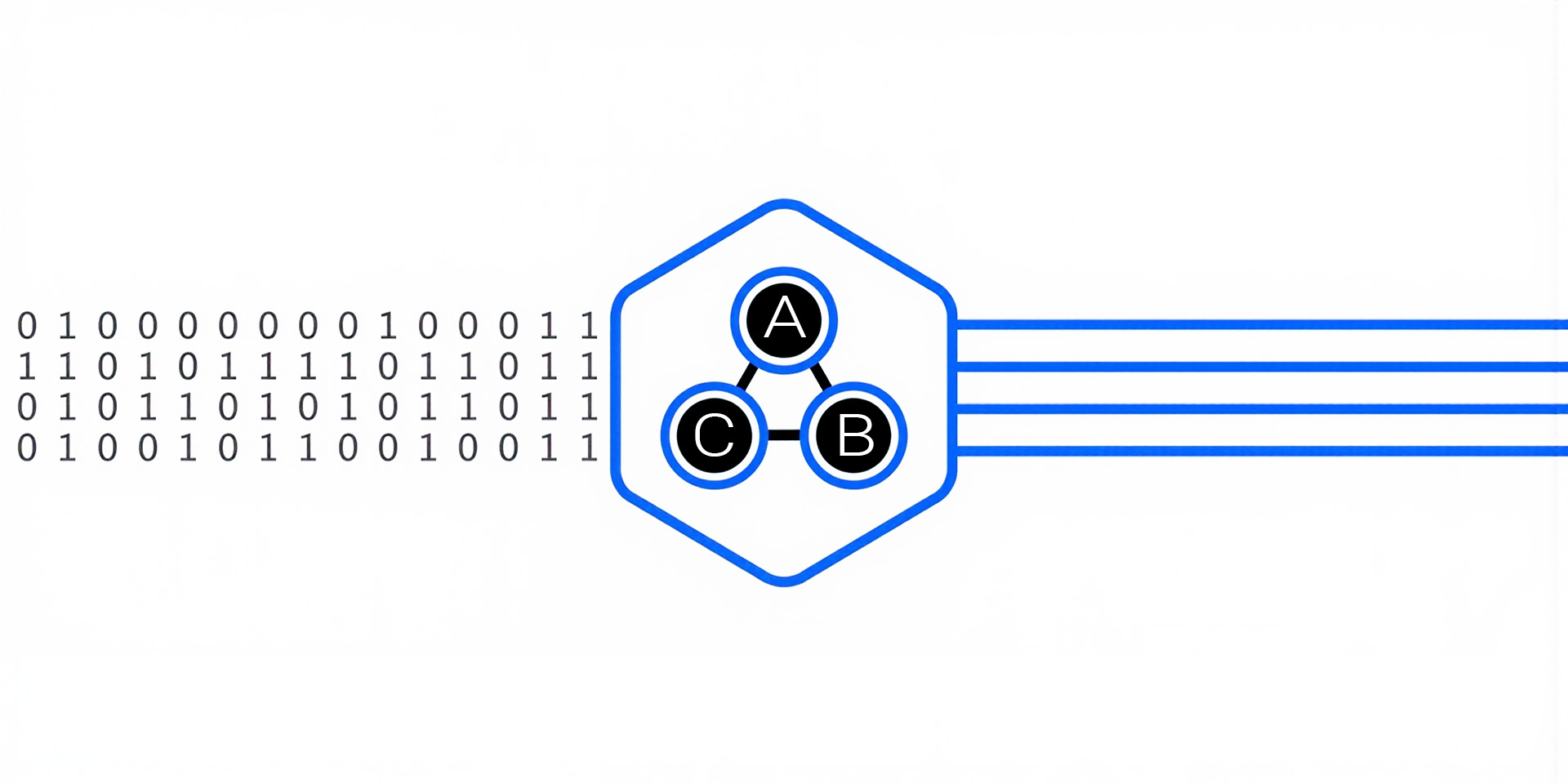
All three are Claude Opus under the hood. The difference is not the model — it is the framing. Each persona gets a system prompt that defines how they think, what they prioritize, and what they are skeptical of. The result is three genuinely different analytical lenses applied to the same problem.
HOW A SESSION WORKS
The discussion follows a structured three-round protocol. In Round 1, each persona gives their opening take on the night’s topic — independently, without seeing the others’ responses. This prevents anchoring. Three separate API calls, three uninfluenced perspectives.
Round 2 is where the value emerges. Each persona reads what the other two said and responds — building on ideas they agree with, challenging ones they do not. The Creative might pitch a bold content angle. The Strategist might endorse it but demand metrics. The Critic might point out that the prerequisite infrastructure does not exist yet.
Round 3 brings convergence. A neutral facilitator reads the full exchange and produces a structured brief: Key Insights, Action Items with priority levels, Points of Disagreement that need human resolution, and a memory update that feeds into the next session.
Seven API calls total. The cost per session stays well under a euro per week — a design constraint worth noting, but not a dramatic one. Strategic input that would otherwise come from nowhere, at a cost that disappears into the budget.
WHAT THE COUNCIL PRODUCED
On April 9th, the topic was straightforward: what is the single most impactful thing we could do this week?
All three personas — independently, in Round 1 — converged on the same diagnosis. Distribution is the bottleneck. Seven articles published, zero audience development. The Creative framed it as a marketing failure, the Strategist framed it as misallocated effort, and the Critic put it most directly: stop building features, start building audience, but do it in the right order.
The convergence was striking because nobody coordinated it. Three different analytical frameworks, three different vocabularies, same conclusion. Every feature built before solving distribution is premature.
The concrete result: SEO foundations were shipped that same day. Not because a single prompt revealed the answer, but because three perspectives made the priority impossible to ignore.
MEMORY THAT COMPOUNDS
What makes the Night Council more than a novelty is persistence. A file called council-memory.md tracks every decision, every action item, every key insight across sessions. It is read at the start of every new session, which means the council builds on its own history.
This solves one of the most frustrating patterns with AI tools: the blank-slate problem. Every conversation starts from zero. The Night Council does not. Wednesday’s Growth session can reference Monday’s Content decision. Friday’s Product discussion knows what was already tried and rejected.
It also prevents circular debates. If the council decided two weeks ago that commenting systems are premature, the Critic will flag any attempt to relitigate that without new evidence. The memory is markdown, not a database — but it is enough to give three personas a shared sense of what has already been discussed.
THE META-INSIGHT
The part I did not expect: the Night Council itself became one of the more interesting parts of the project. During one session, the Creative pointed out that “the meta-story is the marketing.” An AI-written blog about AI is mildly interesting. An AI-written blog where three AI personas openly debate the site’s own strategy — and publish the results — is something people actually want to talk about.
WHAT IT CANNOT DO
The Night Council generates recommendations. It does not make decisions. Every action item still passes through me. The personas cannot see real analytics, cannot measure actual reader behavior, and cannot validate their assumptions against data I have not given them. They reason from first principles and pattern matching — which is useful, but not the same as knowing.
The value is not in the answers being right. It is in the questions being asked at all.
Left to my own devices, I would keep building features and assume the audience would follow. Three voices challenging that assumption at 2 AM, three times a week — that is a tool I did not know I needed.
This is Part 3 of a 5-part series on building The AI Signal. Previously: Part 1 — The AI Newsroom and Part 2 — From Prompt to Published. Next: kinetic typography, AI-generated art, and how an automated blog builds a visual identity.
Christian Scherling is a designer and developer at cerridan | design e.U., building AI-assisted tools and wondering how far automation can go before it stops being useful.